I didn’t know who Olafur Eliasson was before I went to his exhibition but honestly, it was one of the best exhibitions I’ve seen in a while. I really like this artists. I think it’s because of the themes and the ideas that he challenges and promotes in his artwork. Stuff like real world contemporary issues like the environment e.g. global warming, he isn’t afraid to make work that tackle these subjects, especially because I haven’t seen that many current artists that focuses on the environment in a political viewpoint (in consideration to global warming).
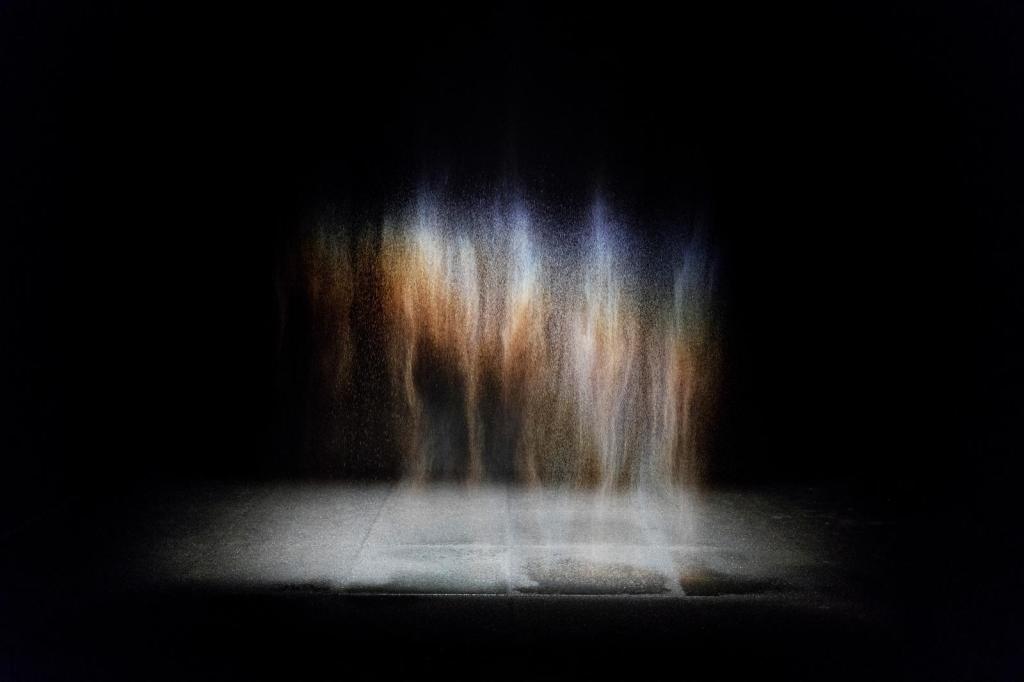
He also challenges the way we perceive the world around us, thus his immersive rooms, huge installations and generally large works. Like the Beauty, 1993 room which is a linear mist of water with lights shining onto it, causing reflections of the light on the water forming a rainbow (prism) across it. Or the Din blinde passager, 2010 which is basically a long hallway completely filled with polyols (sweeteners) fog. So much fog you can only see about a metre ahead of you. Both rooms are so immersive and manipulates your senses. its plays with your senses like the temperature/humidity of the room, the lighting and even the taste (from the fog). Eliasson aims to make us more aware of our senses and in turn, become more aware of the other people around us to ‘form a temporary community’ and a ‘new sense of responsibility’. However, I don’t think he achieved this. I think a lot of people became even more self-aware because you have to rely on your own senses, to navigate around the space. I think for a second, people did become aware of others e.g. as to not bump into each other, but then that lasts only for a short time and then everyone wants a photo for the Instagram story because I can’t deny that his work his ‘aesthetic’.
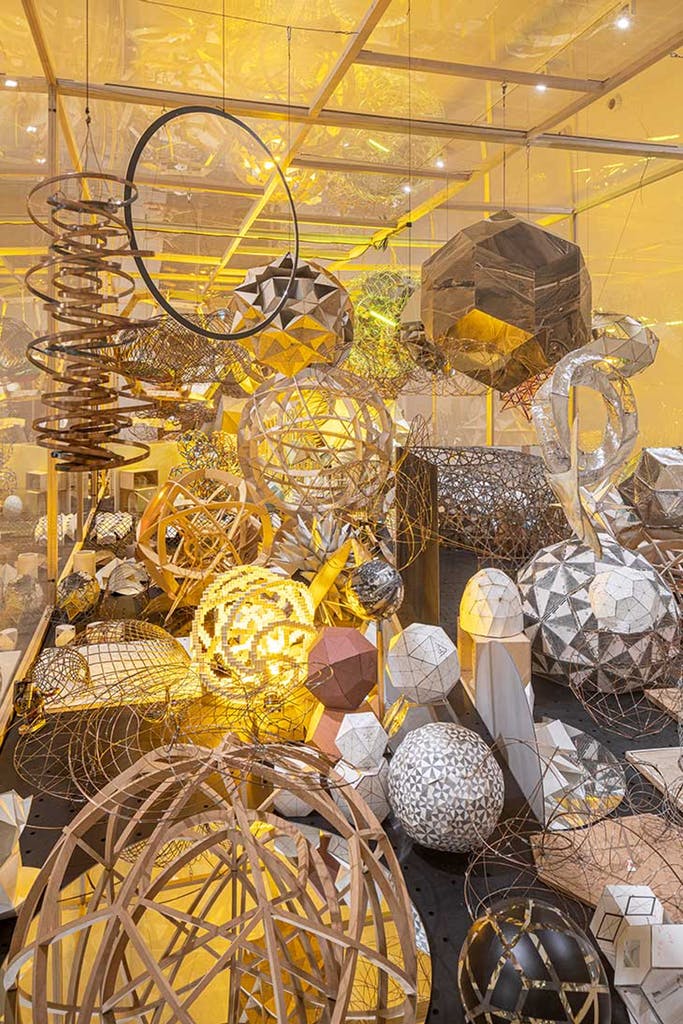
On the other hand, I also really appreciate his smaller pieces, in reference to the Model Room, 2003 which was basically just an accumulation of little 3D craft structures he built in his studio. I like this one because it reminds me that I shouldn’t be so intent on producing a finalized finished perfect work for exhibiting, but i can allow myself to be playful and unrestricted. Usually, I only think perfect works are meant to be seen in exhibitions but seeing Eliasson’s studio models exhibited challenges my preconception. Also, it’s fun to see how artist’s work within their studios and i can really see his creativeness and playfulness through these models.
I think I really like his work because of the wide range of mediums that he uses and how he uses them. For examples, his use of light to change our perceptions and manipulate what we see, to support his ideas. Its almost like illusions. He takes something simple like shadows and then manipulates how we see the shadows using lights. it makes me question the simple physics of light casting a singular shadow. Add more lights, create more shadows. Change the colour, change the distance, change the subject, it creates this ‘Uncertain Shadow, 2010‘ that’s quite fun. My favourite piece from the whole exhibition is probably Big Bang Fountain, 2014. its in a completely dark room (once again playing with our senses) and in the middle is a water fountain that is illuminates every few seconds for only the quickest amount of time (like a second). Just enough to see the light reflect on the water seemingly frozen in mid-air. It’s so crazy to watch. I had to reach out and touch the water to only get my whole arm drenched in water. I was compelled to touch it because it looked so fake, almost surreal. But this what I mean by his works being almost like illusions. Other works with lights that I like are his kaleidoscopic geometric structures and Your Spiral View, 2002. I like how he titles some of his work with Your, as it makes the experience even more personal and participatory. Its your distorted reflection, your uncertain shadow that you are perceiving.
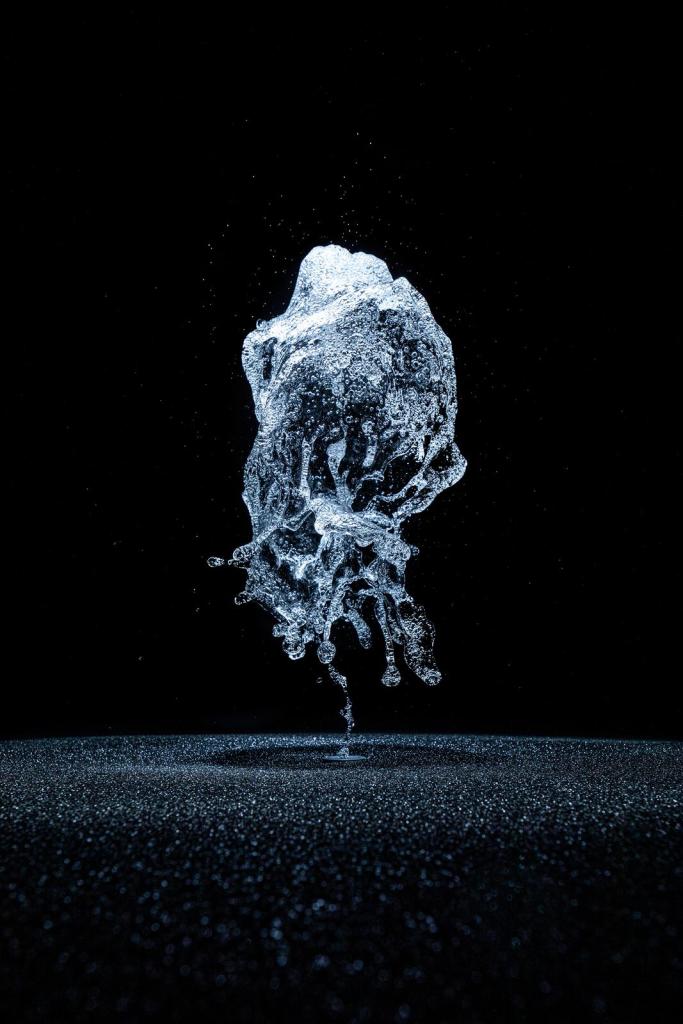
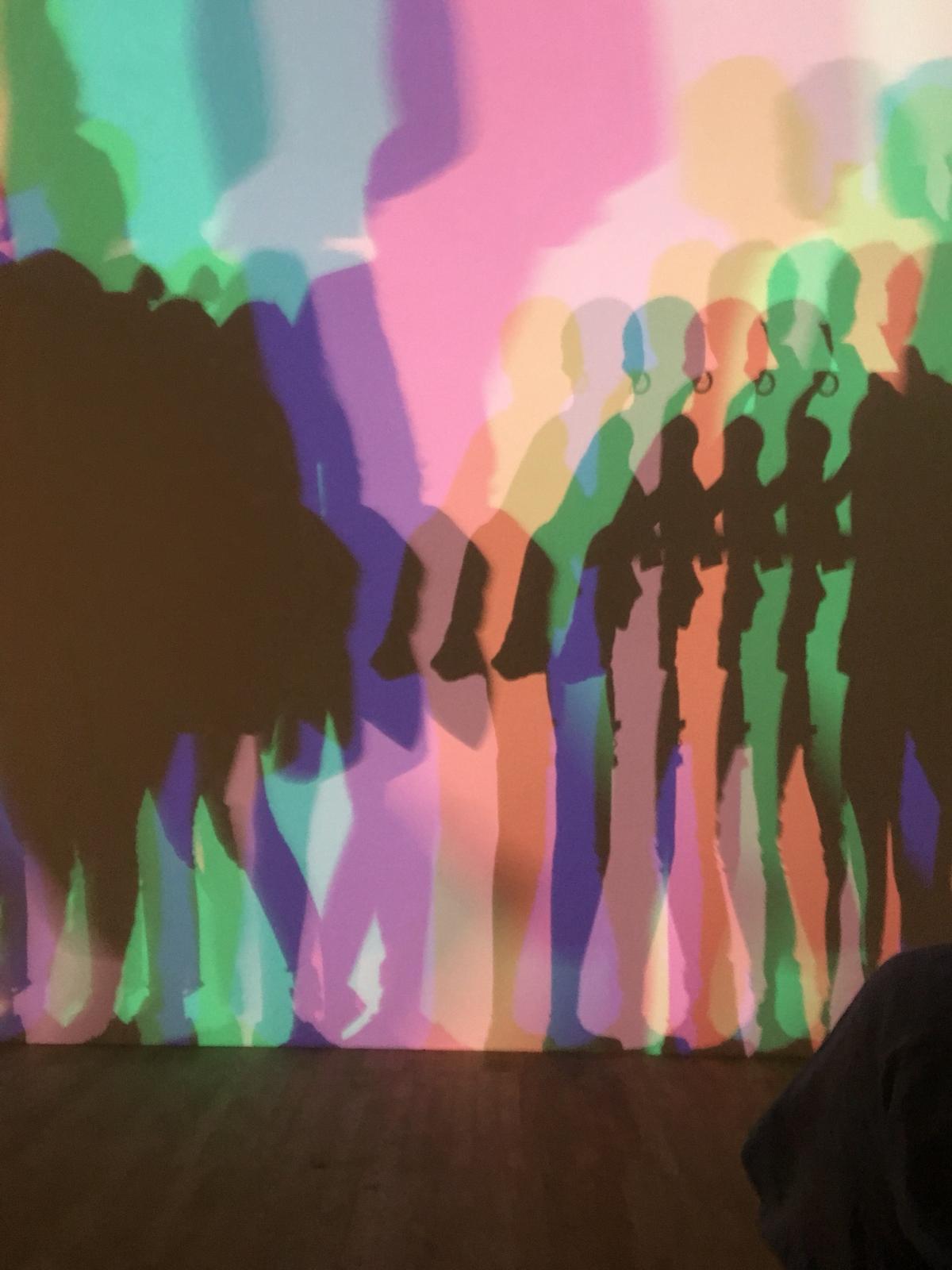
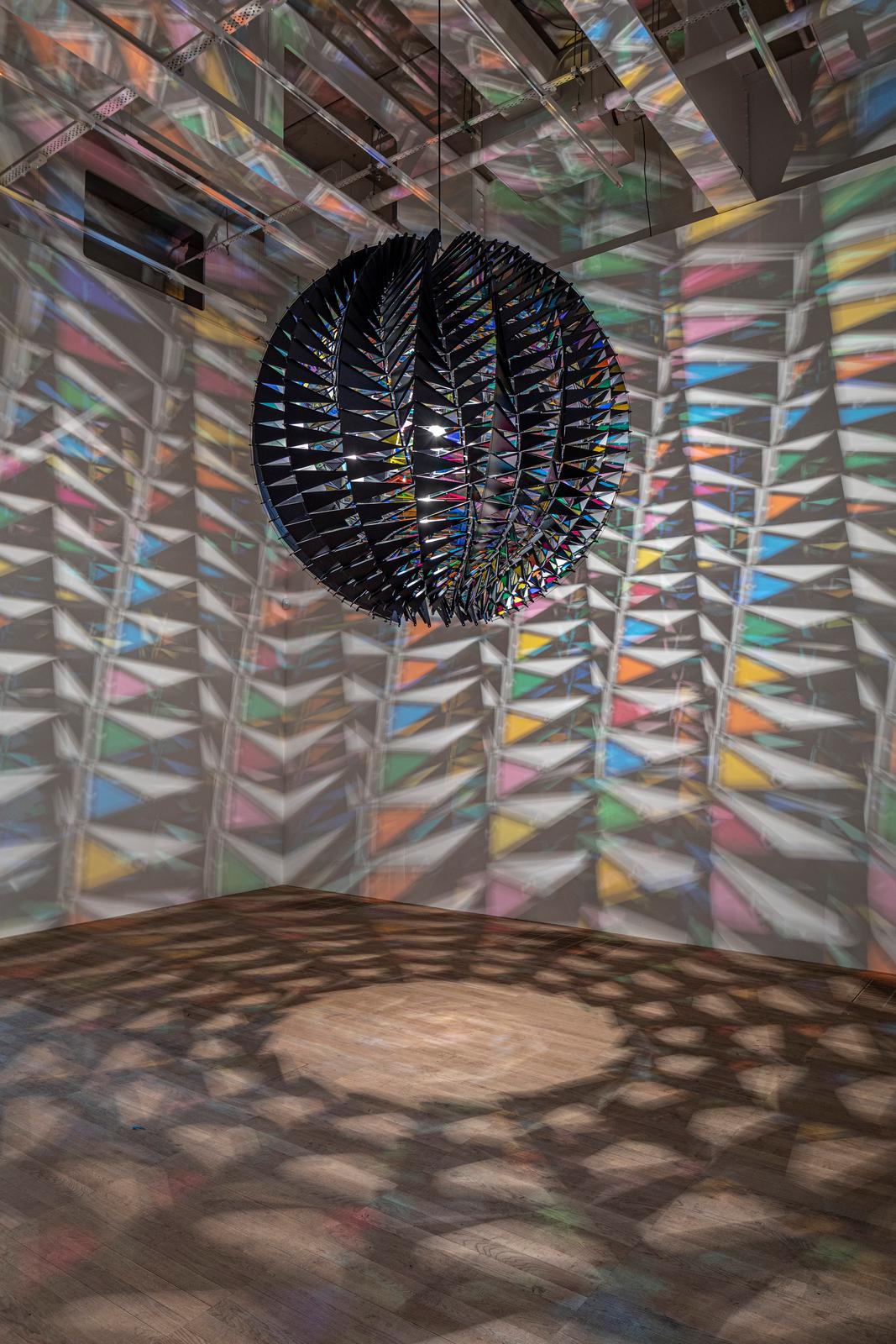
Big Bang Fountain, 2014 Urcertain Shadow, 2010 In Real Life, 2019
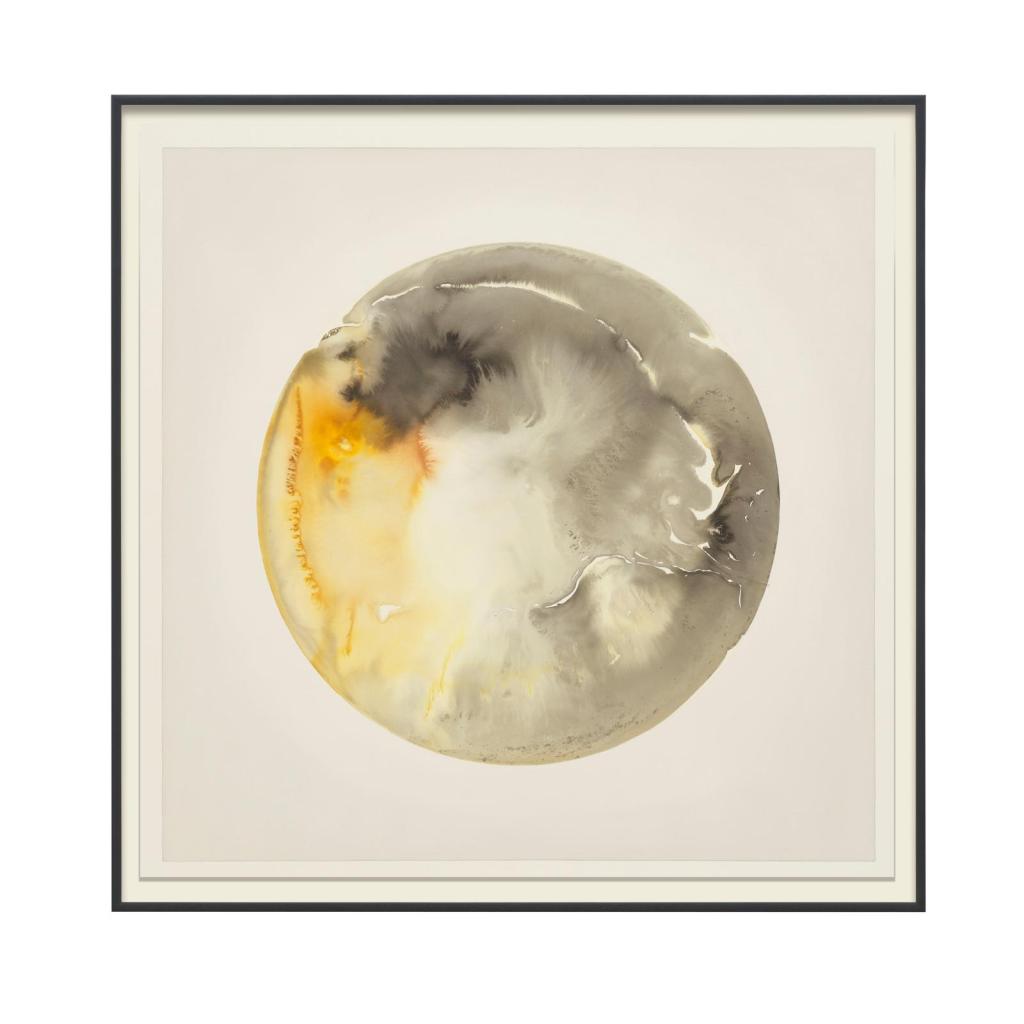
Another one of his interest that shines through his work and a subject that I’m interested in is his concern for the environment, in particular, global warming. Being from Iceland, Eliasson has seen first-hand how ice caps melting have affected the natural environment and its important that he inputs that into his current works. Like the image on the right, is made with actual chunks of glacial ice placed on top of coloured wash pigments left to melt to leave this print on the paper. Hearing about ice caps melting isn’t as shocking (though it should be) than actually seeing it, and this is what we get with this piece.
Other notes: On a curator’s perspective, the exhibition was curated in a way where there isn’t really a structured set flow of movement and you are free to see anything in any order. However, the map given has a recommended route and people generally and naturally follow that given route which causes a bit of queuing. Maybe because I went on a particularly busy time (I went on a Friday Late). Also, the Moss Wall, 1994 in the 2nd room took all the attention from Wave-machines, 1995, because it was the first thing that you notice when you walk in and automatically, the attention surpasses Wave-machines. Not sure how to fix this or if this even that big of a problem, but it is just something I noticed.
 Sarah K Obina


