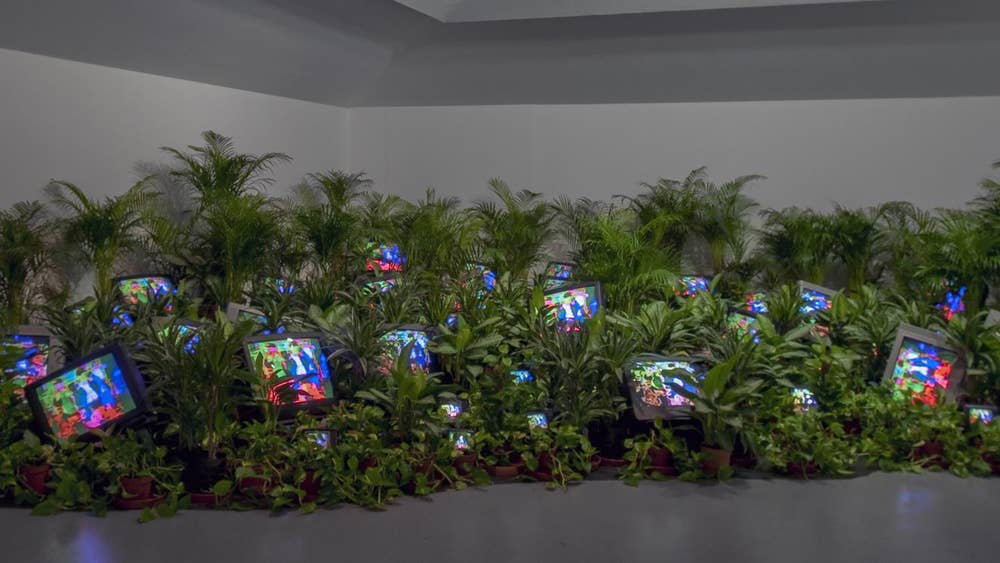
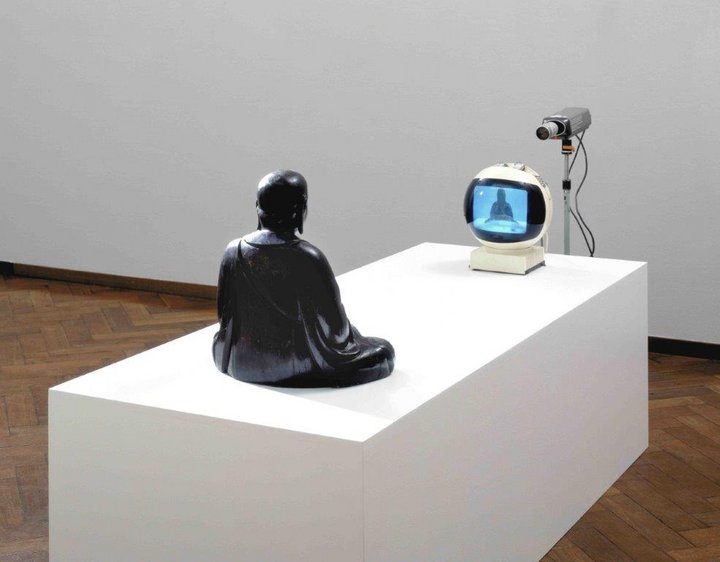
NAM JUNE PAIK South Korean born1932 -2006Fluxus Worked in Japan, Germany and USA Tate Exhibition – Nam June Paik 17 October 2019 – 9 February 2020. This major exhibition is a mesmerising riot of sights and sounds. It brings together over 200 works from throughout his five-decade career – from robots made from old TV screens, to his innovative video works and all-encompassing room-sized installations such as the dazzling Sistine Chapel 1993. Nam June Paik (1932–2006) brought the television to fine art, treating it as a tactile and multisensory medium and object. Trained as a classical pianist, he came into contact with protagonists of the counterculture and avant-garde movements of the 1960s through his early interests in composition and performance, and this engagement profoundly shaped his outlook at a time when electronic images were becoming increasingly present in everyday life. His groundbreaking work is considered seminal to the development of video art. Nam June Paik – TV Garden 1974-7 (2002) Alongside his robotic works, Paik maintained a dynamic drawing practice, both in works on paper and in multimedia sculptures and installations. His modified television sets, in particular, combine the moving image with the free, expressive gesture of abstraction; using brightly colored markers, paints, and other materials, Paik would add expressive layers to the screens. Bakelite Robot (2002) TV Buddha 1974 This sculpture centers on an 18th-century sculpture of a brassy Buddha posed with a tranquil meditation mudra (a symbolic hand gesture used in Buddhism). A video camera in front of him simultaneously records the statue and displays his reflection on a futuristic looking, sleek white television screen. In this closed circuit loop, the Buddha constantly faces his own projected image, caught in an eternal present tense and unable to transcend from his own physicality. The infinite play of the live electronics indicates that the Buddha is doomed to stay on the surface of reality forever caught in the dance between the mind and object reality. It reveals some fundamental issues brought up by technology, including the ambivalent position of religion, history, and images of our selves in contemporary society when viewed upon a screen, once removed from reality. Share this: Share on X (Opens in new window) X Share on Facebook (Opens in new window) Facebook Like Loading... Related Posted on January 13, 2020April 14, 2020

 Sarah K Obina