BOB at Serpentine Galleries
Ian Cheng is an American artist born in 1984, having graduating from University of California, Berkeley with a dual degree in cognitive science and art practice.
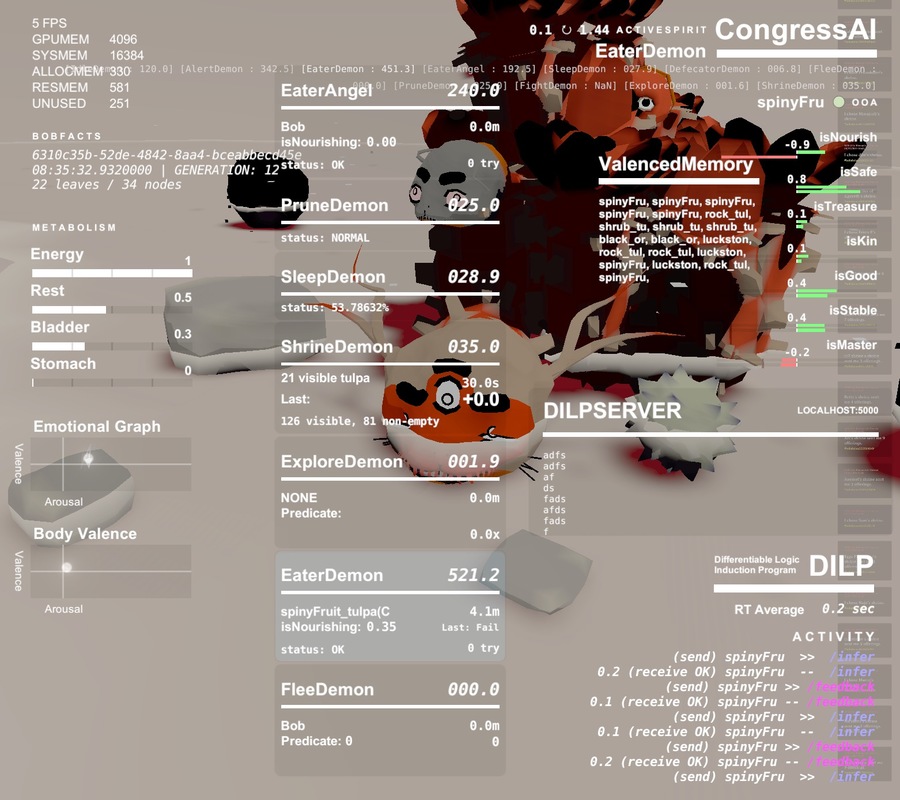
He is known for his live simulation that explore the capacity of living agents to deal with change. These ‘simulations’ are also known to be ‘virtual ecosystems’. The work has less of a focus on the technological aspect and instead, focuses on the how the work can self-evolve and adapt, just like an ecosystem would if any changes are applied to it. The simulation will change and adapt and progress as different factors interact with the work. “It is a format to deliberately exercise the feelings of confusion, anxiety, and cognitive dissonance that accompany the experience of unrelenting change. I wonder if it is possible to love these difficult feelings, because when you love something and there is an abundance of it, you can begin to play and compose with it.“
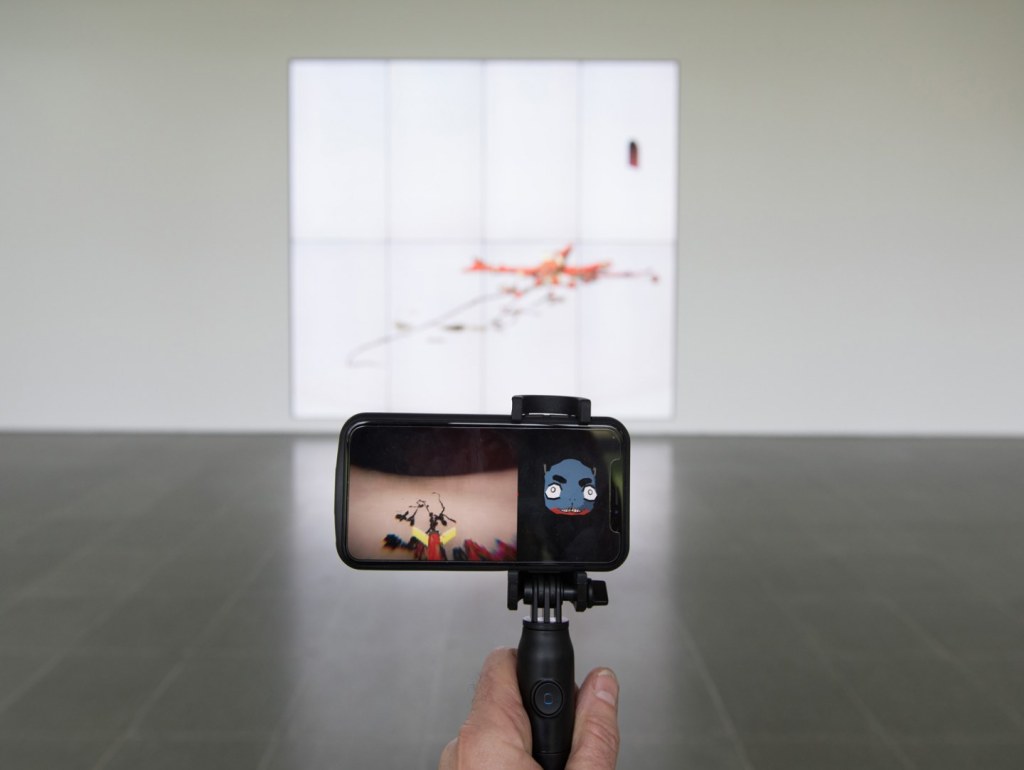
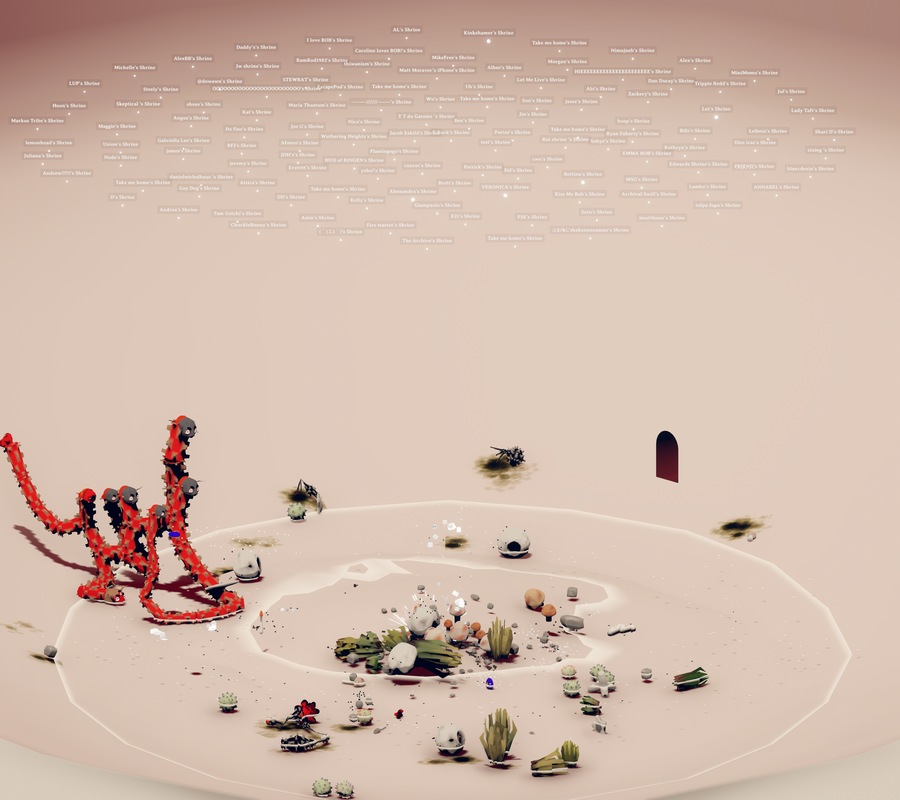
Most recently, he has developed BOB (Bag of Beliefs), an AI creature whose personality, body, and life story evolve across exhibitions, what Cheng calls “art with a nervous system.” He exhibited BOB at the Serpentine Gallery in 2018, a sentient artwork that was continuously growing and evolving at all times, with every interaction. A grid of monitors shows a limbo space within which an animation of a bright red, spiky serpentine creature slithers about. That’s the titular “BOB.” Depending on when you see the show, BOB will be longer or shorter, and have a greater or fewer number of heads, which branch, hydra-like, from its body, as it evolves in relation to different stimuli.
 Sarah K Obina