BILL VIOLA

Bill Viola (born 1951) is a contemporary video artist whose artistic expression depends upon electronic, sound, and image technology in New Media. His works focus on the ideas behind fundamental human experiences such as birth, death and aspects of consciousness.

His works include room-size video installations, sound environments, electronic music performances and flat panel video pieces, as well as works for television broadcast, concerts, opera, and sacred spaces.

Bill Viola has been referred to as “the Rembrandt of the video age” and, indeed, his work pays homage not only to the famous Dutch master but to the tradition of creating large-scale works of art that draw the viewer into beautifully painted images and compelling narratives. There is often a spiritual component to his work, with elements of Zen Buddhism, Islamic Sufism, and Christian mysticism underpinning themes considered universal: birth, death, love, sex, grief, and redemption. Viola considers the “phenomena of sense perception” as a path to self-awareness; therefore, his work is a blend of experimental video art and sound, including avant-garde music performance. He was one of the earliest artists to explore the potential of the video camera, which in its most basic form in the 1970s only vaguely resembles the sophisticated devices of today. As one of the pioneers of the medium, he has consistently exploited its rapidly changing technology to create over 150 artworks over the last 40 years.

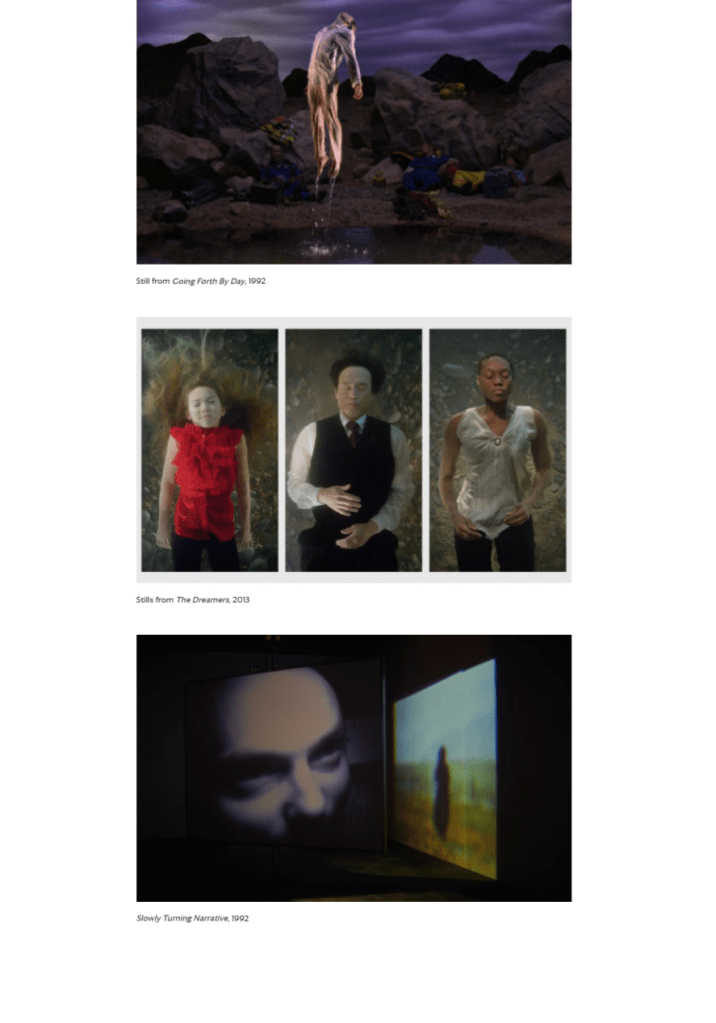
Slowly Turning Narrative, 1992
Central rotating screen, mirrored on one side; two channels of video projections at opposite ends of space, one color, one black-and-white, in large, dark room; amplified mono sound, one speaker; amplified mono sound, five speakers
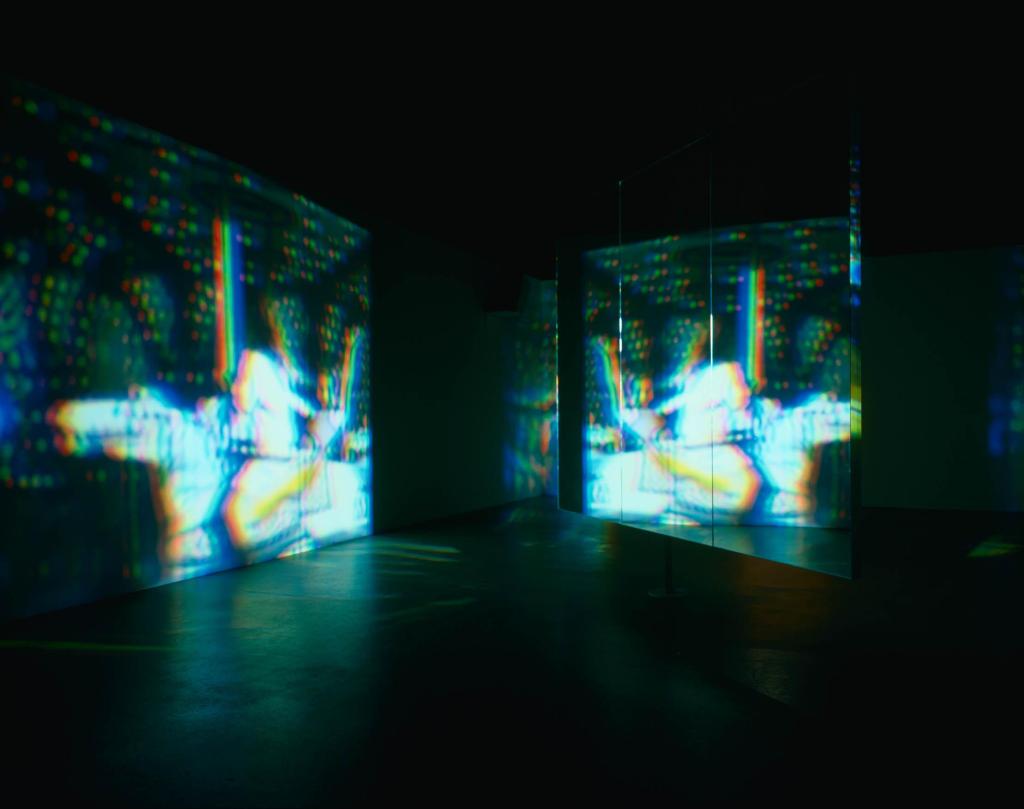
 Slowly Turning Narrative offers Viola’s characteristically hypnotic sense of wonderment at the world and also reveals the fullness of his philosophical vision. Slowly Turning Narrative includes two projections on a large central rotating screen. One presents images of virtually everything that constitutes life, embracing the broadest sweep from birth to death. The other shows a close-up of Viola’s head incanting “the one who lives,” “the one who acts,” “the one who reads,” and more. As this screen rotates, a mirror on the back comes into view, reflecting the image of the viewer in this video evocation of human existence.

The work is concerned with the enclosing nature of self-image and the external circulation of potentially infinite (and therefore unattainable) states of being, all revolving around the still point of the central self. The room and all persons within it become a continually shifting projection screen, enclosing the image and its reflections, and all locked into the regular cadence of the chanting voice and the rotating screen. The entire space becomes an interior for the revelations of a constantly turning mind absorbed with itself. The confluences and conflicts of image, intent, content, and emotion perpetually circulate as the screen slowly turns in the space.

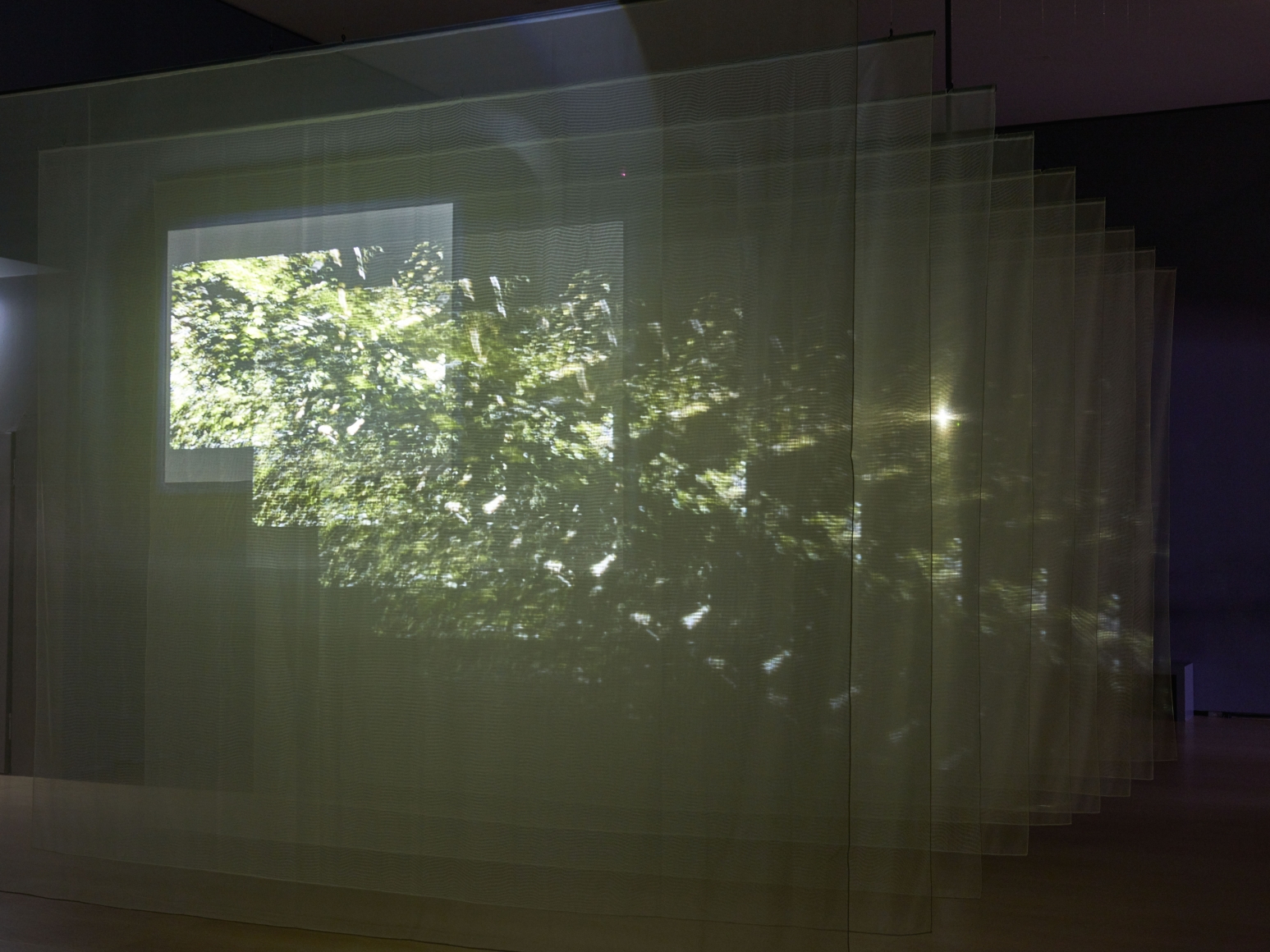
The Veiling, 1995

The artist created a system of parallel fabric veils to function both as sculptural elements and screens to catch the light of multiple projections.

Thin parallel layers of translucent cloth hang loosely across the center of a dark room. Two projectors at opposite ends of the space face each other and project images into the layers of material. The images show a man and a woman as they approach and move away from the camera, viewed in various nocturnal landscapes. They each appear on separate opposing video channels, and are seen gradually moving from dark areas of shadow into areas of bright light. The cloth material diffuses the light and the images dissipate in intensity and focus as they penetrate further into the scrim layers, eventually intersecting each other as gossamer presences on the central veil. Recorded independently, the images of the man and the woman never coexist in the same video frame. It is only the light from their images that intermingles in the fabric of the hanging veils. The cone of light emerging from each projector is articulated in space by the layers of material, revealing its presence as a three-dimensional form that moves through and fills the empty space of the room with its translucent mass.


Leave a comment