Artist Research
Camille Utterback
Liquid Time Series (2000 – 2002)
The unexpected permanence of certain elements (and the transience of others) hint at how both personal and cultural memory have a physical component subject to the unpredictable nature of decay.
Alinta Krauth
Cartology Apology (2016)
A large scale, 18m long by 5.5m high by 3m wide projection rectangle that casts an image along six separate see-through scrims. This creates a holographic effect, and the height allows audiences to walk underneath the artwork down the isle. The digital work projected through the installation is frame-by-frame animation made from re-created topographical imagery drawn by the artist, taken from mountain ranges in Victoria, Australia.
By re-imagining existing topographical data, the artist seeks to question the concepts of mapping and geography, and understand it as a personal and fluid experience. More than just a data visualization, the data is thrown together in such a way that it becomes kaleidoscopic and intensely layered. The work also brings up the differences between westernized ways of viewing the universe, and indigenous ways of doing so in the areas portrayed. In 12 hours 11000 people came through the church to sit under the artwork. – http://www.alintakrauth.com/#!portfolio
Chantal Ackerman
https://archive.camdenartscentre.org/archive/d/chantal-akerman

D’Est, translated into English as From the East, is a 16-mm experimental documentary film, shot in Poland, Russia and the former East Germany. The film investigates the stories of people’s lives in an unstable time after the collapse of the Eastern Bloc through the idea of memory.
Janet Cardiff & George Bures Miller
Dominique Gonzalez-Foerster
OPERA (QM.15) (2016) https://www.estherschipper.com/exhibitions/7-qm.15-dominique-gonzalez-foerster/
The title of the exhibition, QM.15, stands for French 19th century actress Sarah Bernhardt’s motto “Quand même”, which might be translated as “even so” or “nevertheless.” It can be understood as a reference to the high price the drive to create may exert on an artist, as Dominique Gonzalez-Foerster (DGF) has noted about the three characters which appear in QM.15: Sarah Bernhardt, Marilyn Monroe and Maria Callas, “they can’t stop, and art is their vehicle; their very lives must become works of art, no matter the cost. The supreme excitement is the artistic experience.”
Opera (QM.15) transforms a recording of Gonzalez-Foerster’s live apparition as Maria Callas into a holographic illusion that creates a ghostly operatic presence in a very large dark and empty space.
Teatro (QM.15) is a curtain ghost. The life-sized image of L’Aiglon by Sarah Bernhardt by DGF appears and disappears on a dark velvet curtain. Condensing multiple layers of historical and fictional associations, the actress is seen in one of her signature “trouser roles,” the part of L’Aiglon, in a play about the life of the young Duke of Reichstadt, son of Napoleon, written especially for Bernhardt by Edmond Rostand
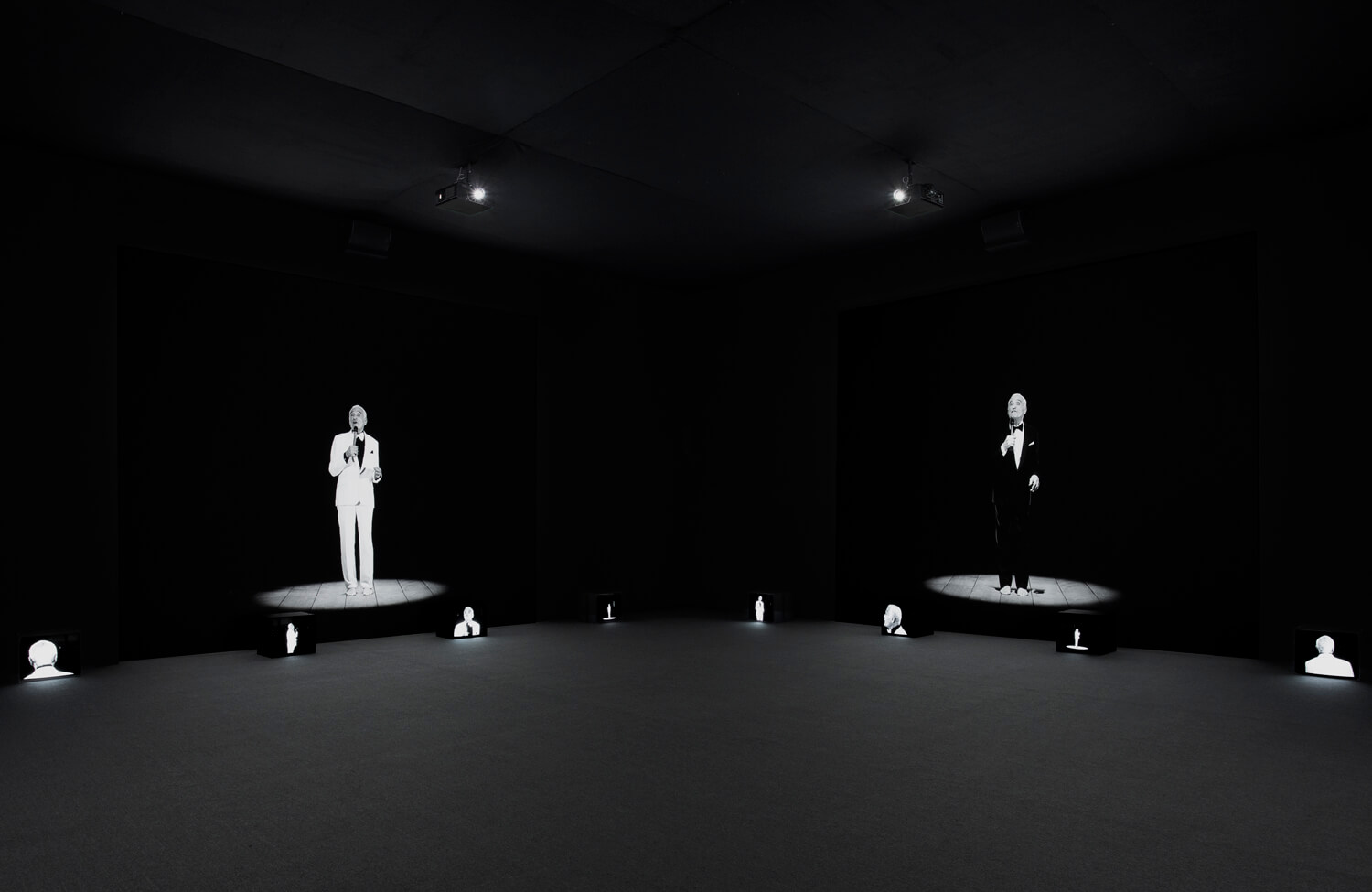
thanx 4 nothing is an immersive experience, setting up the gallery as a black ox theatre that places Giorno front and center, split across screens as he reads a work expressing the titular poem in the work. The piece is presented as a framing of gratitude for “everyone and everything,” with Giorno performing his work with his signature flair, reading the work with energy and zeal as he looks back over his life with frank insight and humor, reflecting on loves and losses, friends and enemies, sex and drugs, depression and spiritual acceptance. The duality of Giorno’s presence, his interlocking intonations and gestures filling the gallery with his presence and his particular brand of spiritual zeal, is a fascinating look at the artist’s work and its framing by those he loved, and who loved him. “May every drug I ever took,” he reads, “come back and get you high, may every glass of vodka and wine I’ve drunk come back and make you feel really good, numbing your nerve ends allowing the natural clarity of your mind to flow free.”
Mark Leckey
O’ MAGIC POWER OF BLEAKNESS (2019- 2020)
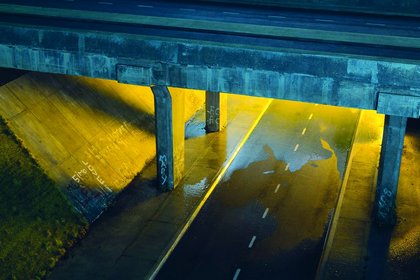

- The bridge – a recurring motif in his work – is the setting for a new audio play. Focusing on a group of teenagers, the play is inspired by folklore and stories of changelings and ‘fairy raids’ and by the artist’s own pre-adolescent experiences.
- New video work will be shown alongside two of his seminal pieces: Fiorucci Made Me Hardcore 1999 and Dream English Kid 1964–1999 AD 2015.
- Mark Leckey is one of the most influential artists working today. Since he first came to prominence in the late 1990s his work has addressed the relationship between popular culture and technology as well as exploring the subjects of youth, class and nostalgia.
A critique is that the exhibition was too stationary. Although Leckey uses a different environment other than the white cube of a gallery space (by bringing the work to a bridge underpass), the works itself are very stationary. There is no interaction between the work and the viewer (almost passive) as they just look at the videos/work. Its basically a normal gallery where you look at a work and move to the next work, but under a bridge.
Ibrahim El-Salahi
El-Salahi frequently draws on childhood memories and visions experienced during meditation for inspiration. In his words, he seeks to ‘register and describe what I perceive through the senses while remaining tightly bound to an elusive, indecipherable, metaphysical essence’ (El-Salahi, ‘The Artist in His Own Words’, in Hassan 2013, p.89). In Reborn Sounds of Childhood Dreams I the lines and forms are infused with spirituality and social consciousness. For El-Salahi, sound and line are closely connected. He has explained that lines form letters, which in turn inform sound and thereby enable communication (in conversation with Tate curator Kerryn Greenberg, 24 May 2012). This connection is explicit in El-Salahi’s title Reborn Sounds of Childhood Dreams I, in which he captures the fleeting, and often dramatic, moments when memory and dreams, past and present, collide. https://www.tate.org.uk/art/artworks/el-salahi-reborn-sounds-of-childhood-dreams-i-t13979
Reborn Sounds of Childhood Dreams I (1961–5)

Artist using visual imagery to explore memory:
Susan Hiller – Monument incorporates forty-one photographs of memorial plaques the artist came across in Postman’s Park, near St Paul’s Cathedral, London – Each plaque commemorates an ordinary man, woman or child who died while performing an act of heroism.
Angus Fairhurst – created works that try to physically erase the memory of man. He has manually blanked out man-made objects in geographically important places. This makes us think about memories of the earth before man, and the effect humankind is having on our world.

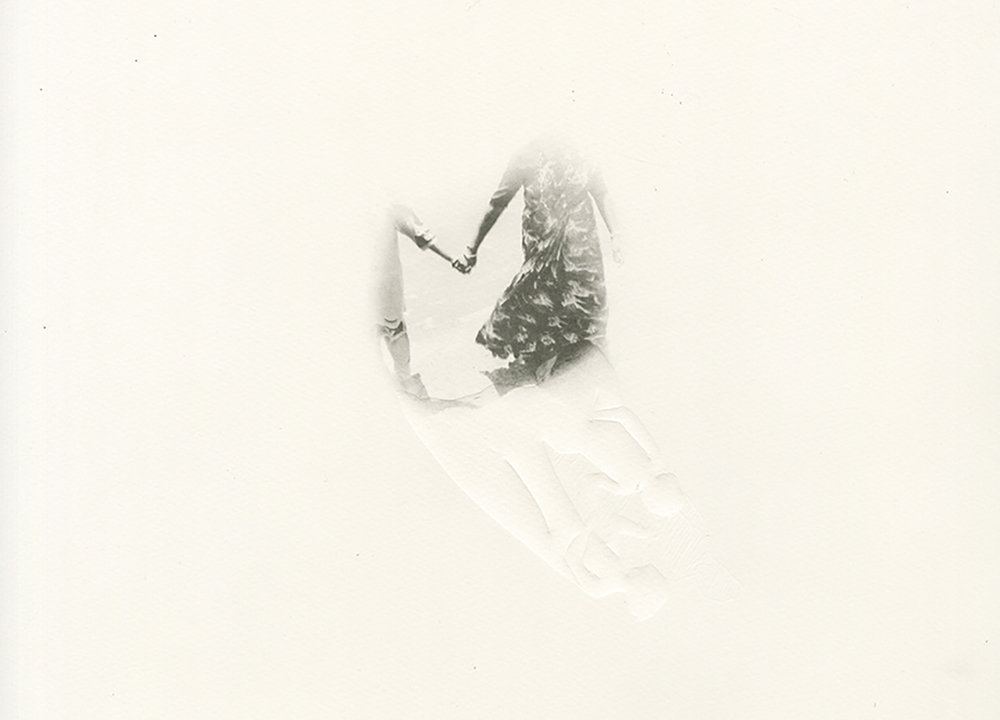


(1993)
Laurie Anderson
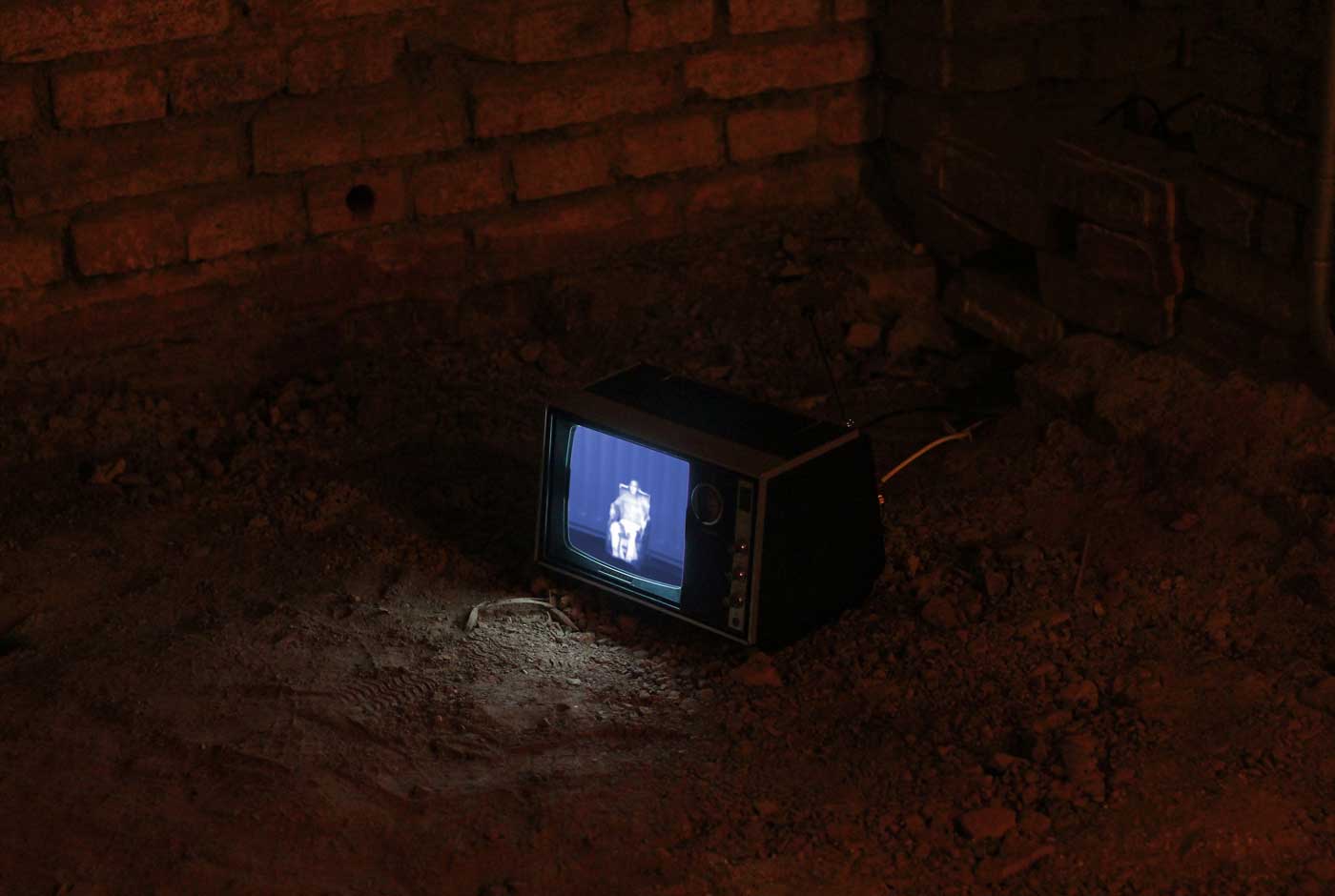
This three minute video features the artist telling an anecdote about a session with her psychiatrist projected onto a twenty cm high white clay figure. The anecdote involves the artist mentioning to her therapist that she noticed lip marks on a mirror and then, upon returning the following week, seeing they had disappeared. Initially, the psychiatrist questioned the artist’s perception and in what turned out to be the final session, admits that she learned of her 12-year-old daughter kissing the mirror. The therapist couldn’t see these marks from where she was sitting, and the maid had cleaned the mirror on Fridays. Anderson eventually comes to the conclusion that she and the psychiatrist see things from a totally different angle and decides from then on, to no longer visit the psychiatrist.
Samuel Beckett
The mouth utters jumbled sentences at a ferocious pace, which obliquely tell the story of a woman of about seventy who was abandoned by her parents after a premature birth and has lived a loveless, mechanical existence, and who appears to have suffered an unspecified traumatic experience. The woman has been virtually mute since childhood apart from occasional outbursts, one of which comprises the text we hear. From the text it could be inferred that the woman had been raped but this is something Beckett was very clear about when asked. “How could you think of such a thing! No, no, not at all—it wasn’t that at all.” It seems more likely that she has suffered some kind of collapse, possibly even her death, while “wandering in a field … looking aimlessly for cowslips.”
Samuel Beckett, Not I (1971) Script
Bruce Nauman
Each version has been edited with slow-motion, colour change, and the addition of footage filmed during the rehearsals in which the action was deconstructed by a man’s voice shouting out instructions. The four looped videotapes are played on twelve monitors stacked up in four columns of three. This results in a wall of staggered action, sound and motion which intrudes aggressively into the space around it. The viewer is presented with a hypnotic repetition of pointlessly cruel and destructive violence which is both seductive and alienating.
Ryoji Ikeda
Walking Videos
Mark Wallinger – Threshold to the Kingdom, 2000
Martin Creed – You Return, 2013
Bill Viola
Tiny Deaths was made in 1993. Barely visible figures are perceived in the darkened space until crescendos of light and sound bring moments of drama. The three projections envelop the viewer in the intense experience of the appearance and sudden disappearance of these presences.
There is no beginning or end to the procession of individuals— they have been walking long before we see them here, and they will be walking long after they leave our view. The constant flow of people suggests no apparent order or sequence. As travelers on the road, they move in an intermediate space between two worlds. A small marker in the forest grants them safe passage through this vulnerable state.
Going Forth By Day by Bill Viola & John Hanhardt, Pg29
 Sarah K Obina